
Ferrari Daytona in Detail
A top 10 list of the cutting edge technologyWhen the Ferrari Daytona was launched in 1968 it incorporated technology that was at the cutting edge in Formula 1 and endurance racing. To celebrate the release of Ultimate Ferrari Daytona, the definitive two-volume history.
Here’s our look at 10 of the most fascinating Daytona details:
#1 The Wheels
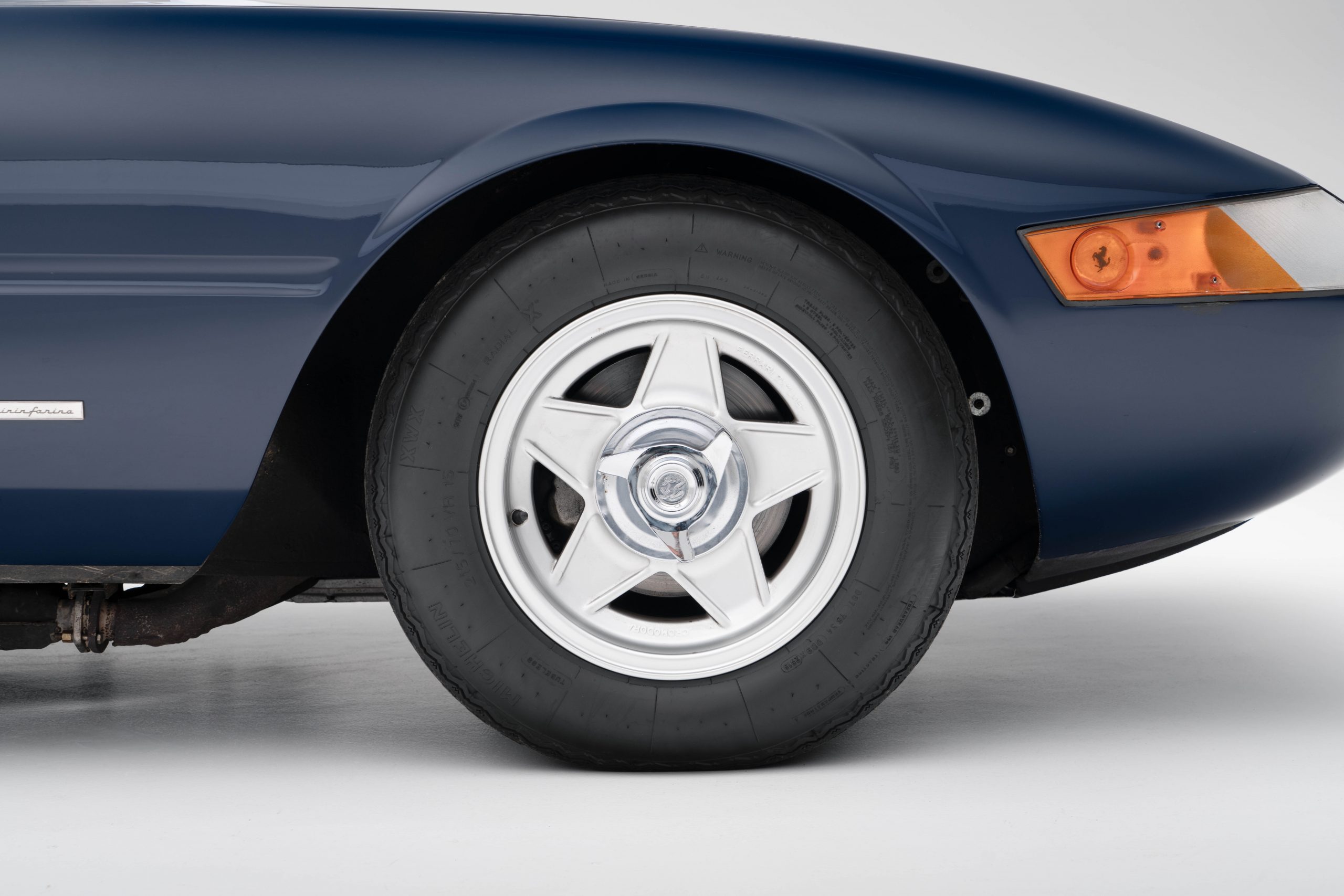
Wire-spoke wheels were common on sports and GT cars in 1968, so the Daytona’s five-spoke alloys were strikingly modern.
They were centre-lock wheels with a three-eared spinner, echoing Ferrari’s practice in F1 since the mid-1960s. A simple, minimal design, in contrast to the fussier Campagnolo alloys, which had been available on the 275. Similar wheels would be used on later Ferraris such as the 365 BB.
#2 The Four Cams
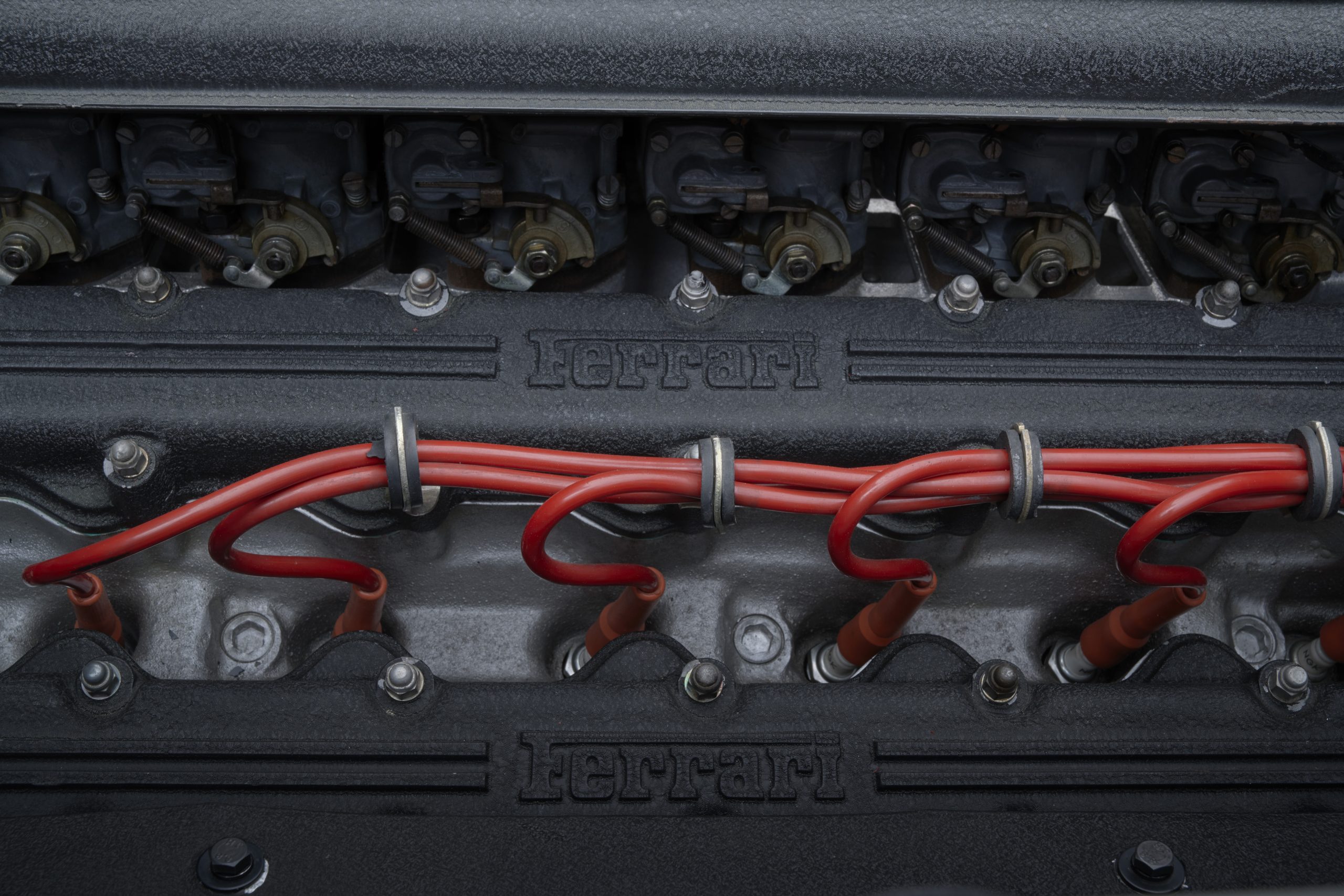
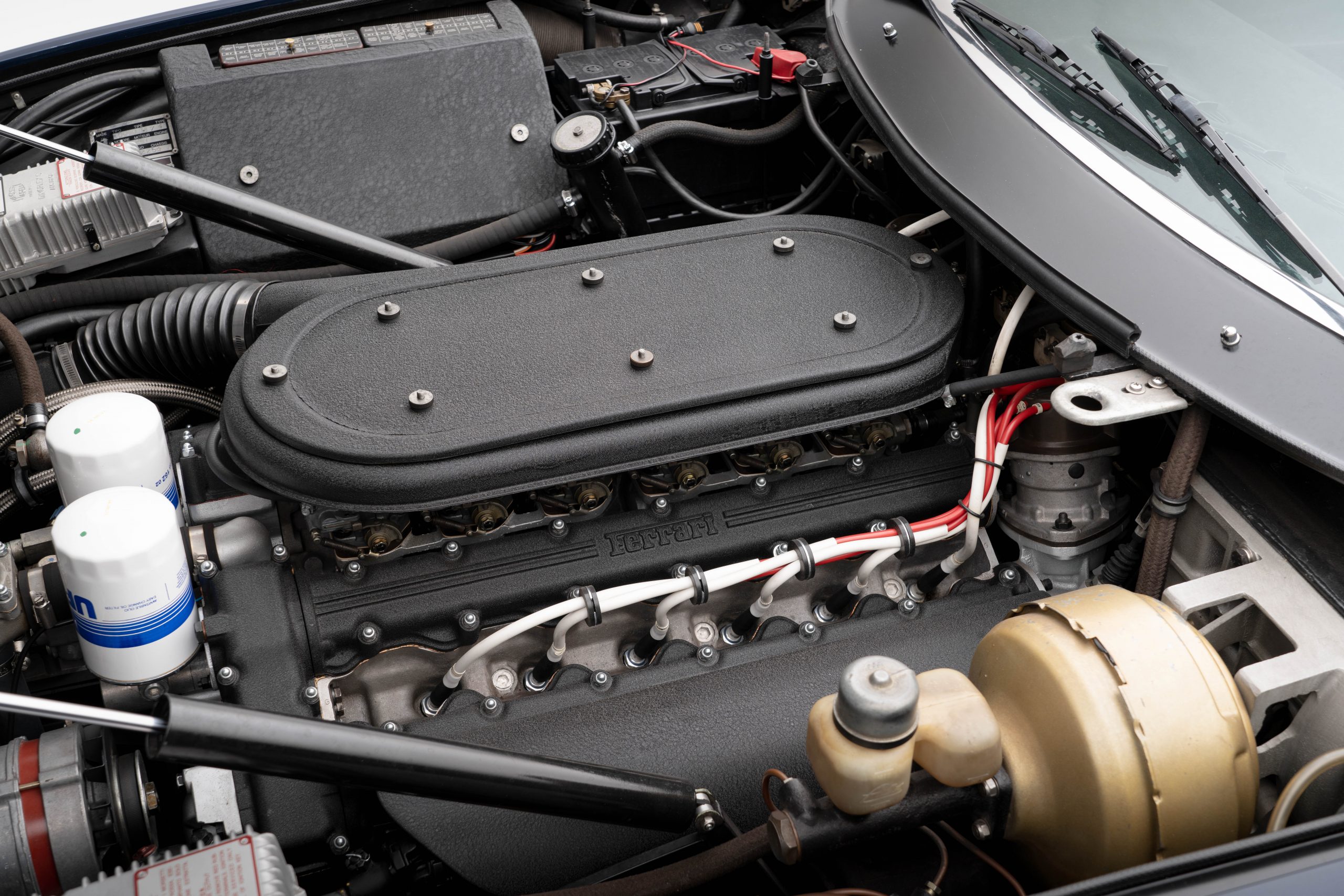
Twin camshafts on each bank of cylinders ensure that the valves could be ideally placed on either side of the combustion chamber for optimum efficiency. Two banks of cylinders, each one with two cams, made this a four-cam engine – denoted by the ‘/4’ in the 365 GTB/4 designation. It was technology used by Ferrari’s race engines in Formula 1 and endurance racing, and introduced to the company’s road cars in the 275 GTB/4 of 1966, but four cam engines in road cars were still rare in ’68.
#3 The Long Block
The Daytona’s engine had its roots in Ferrari’s first engine, a 1.5-litre V12 designed by Gioacchino Colombo for the 125 S in 1947. It was designed for expansion and by 1964 Ferrari was using basically the same engine in 3.3-litre form in the 275 GTB. A redesign of the block then made more space to accommodate wider bores and a longer stroke. This so-called ‘long block’ meant the Daytona engine could have a capacity of 4.4-litres, and developed 352bhp.
#4 Its Aero Shape
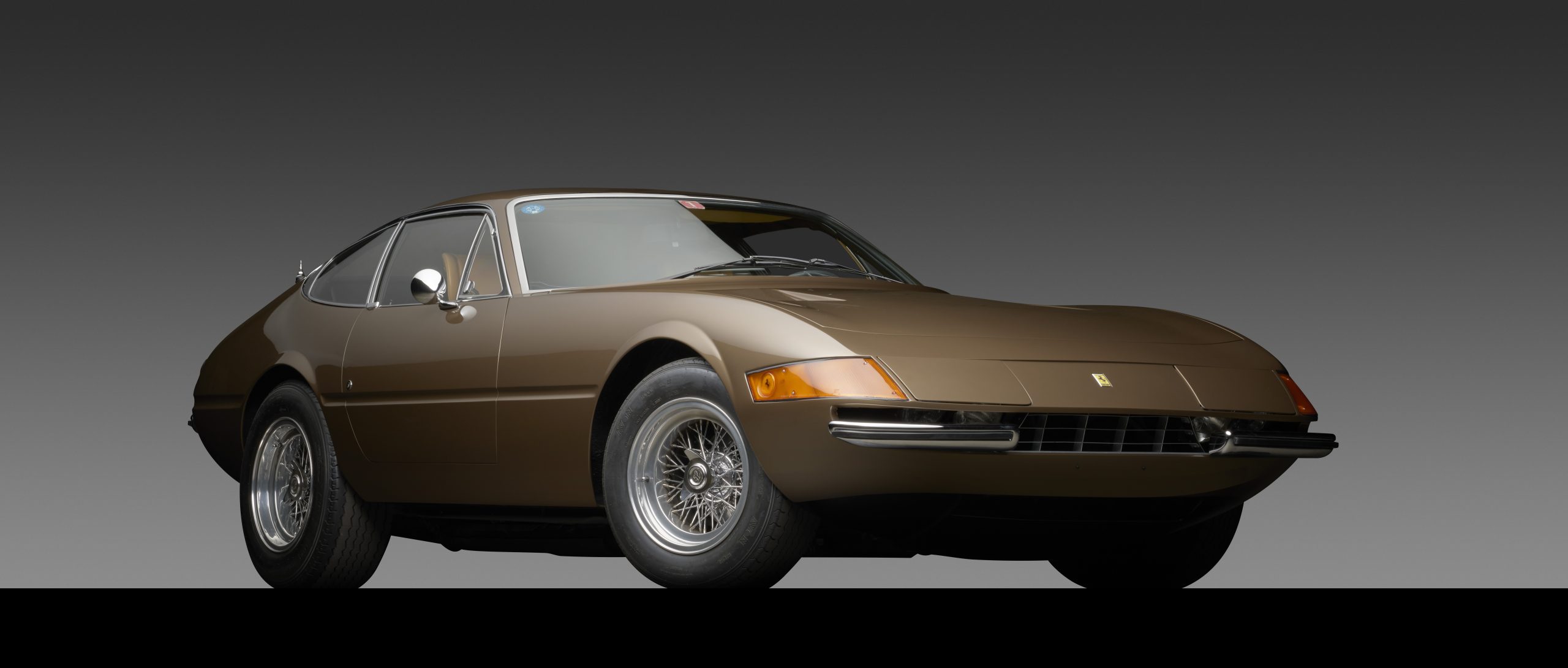
Leonardo Fioravanti proposed a striking modern new shape for the Daytona to replace the old fashioned 275 GTB. It was a cleaner and simpler shape, with an air-cleaving shovel nose, reflecting Fioravanti’s background as an aerodynamicist. Clever, subtle detailing like the wedge-shaped indicators and the groove along the side of the body helped to make it one of the most attractive and memorable Ferraris of all.
#5 Pininfarina
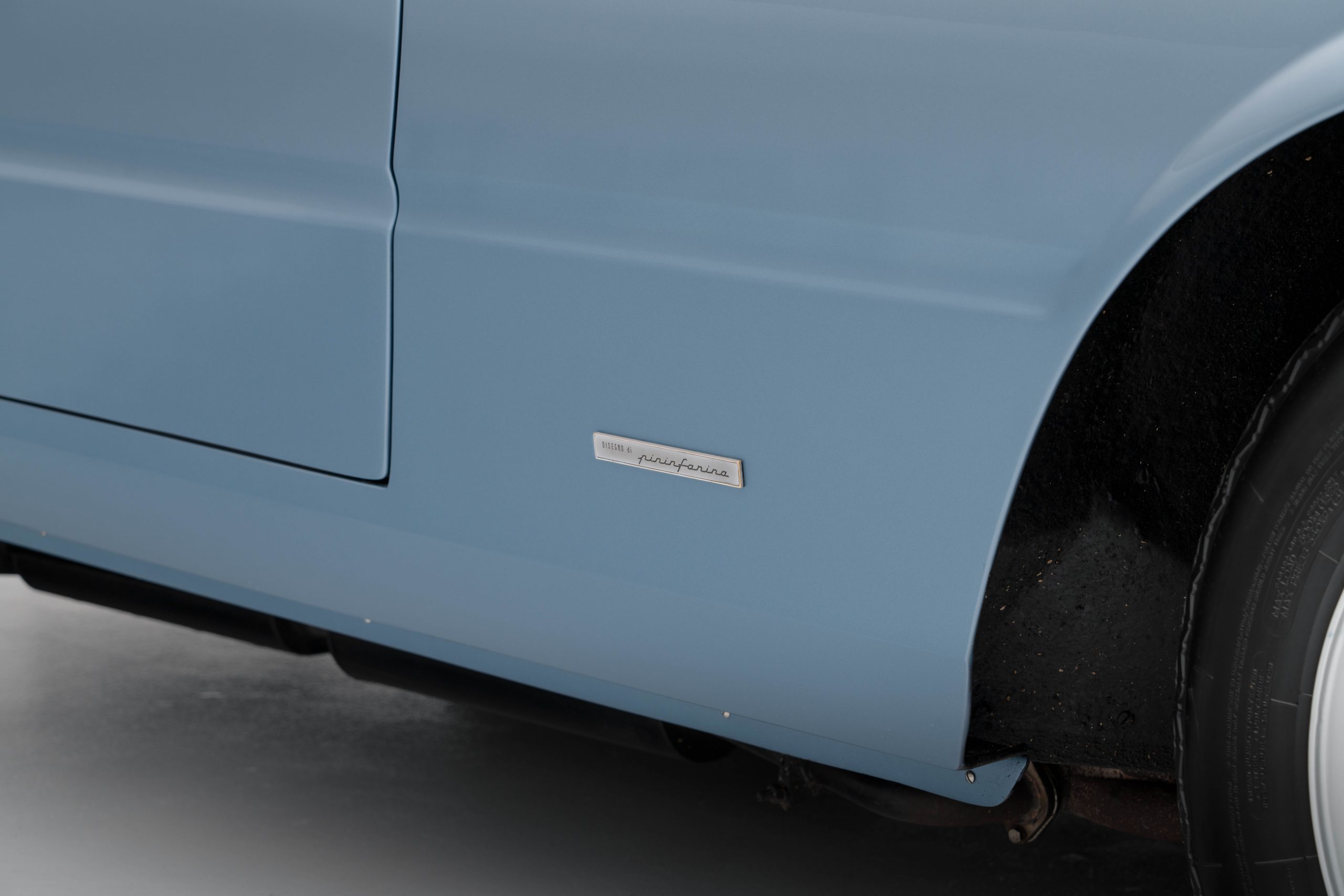
Pininfarina badges adorn the Daytona’s flanks, as they do on many Ferraris. In the Daytona’s case the project originated with Pininfarina and designer Leonardo Fioravanti, who anticipated that the 275 GTB would quickly be seen as old fashioned and a new design direction would be required. Fioravanti convinced first the Pininfarina management and then Enzo Ferrari himself that this was the direction to go.
#6 Comprehensive Instrument Panel
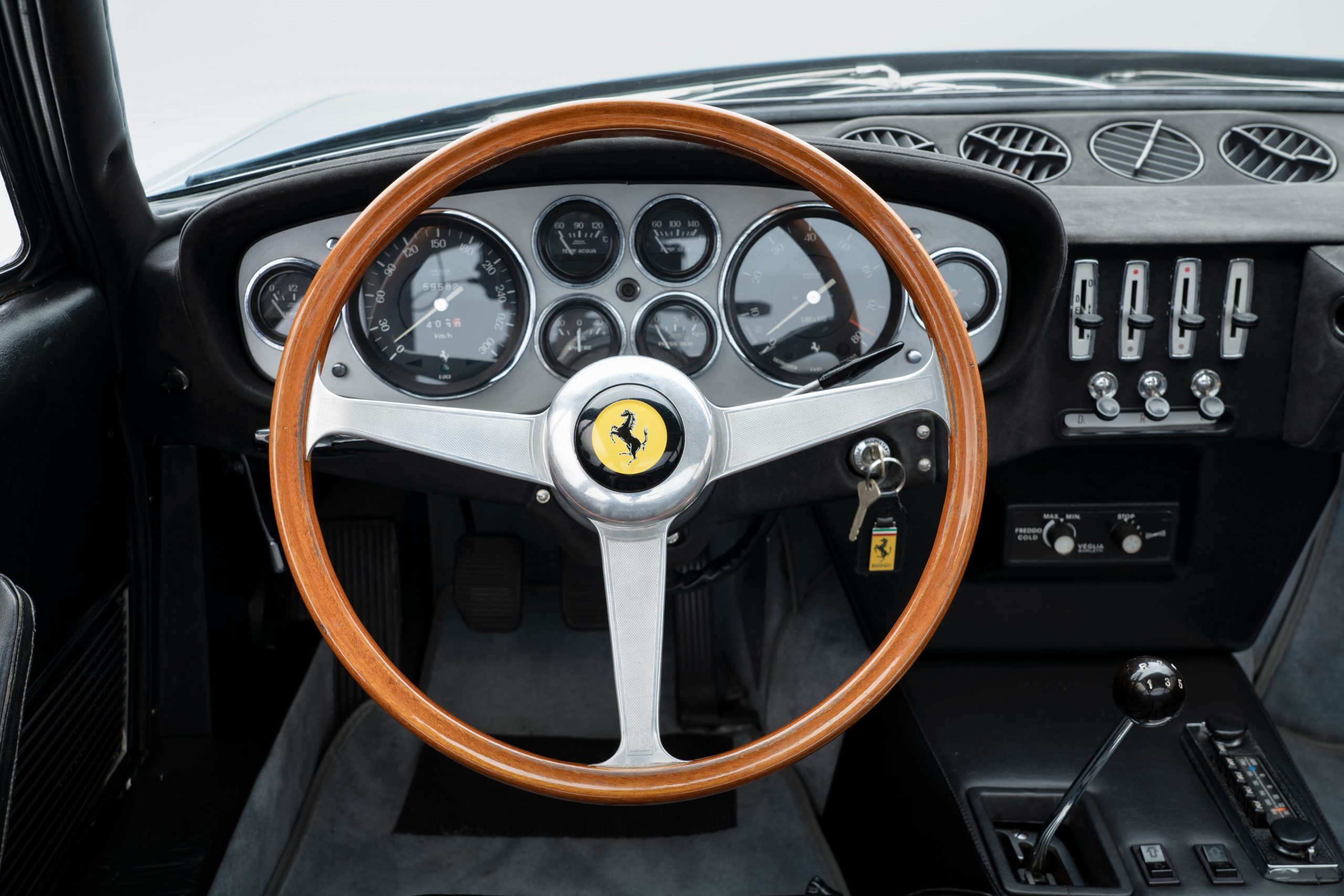
This is the Daytona driver’s eye view. The steering wheel is raked back in classic Ferrari style, with a big wood rim on early cars and the option of a smaller leather-bound wheel later. Between the alloy spokes you can see the eight-dial dash that gives you all the information you could wish for to monitor the health of the four-cam V12 up front. Just imagine sitting here with the engine wailing its way to 8000rpm and the Daytona reeling in the horizon.
#7 Luscious Interior
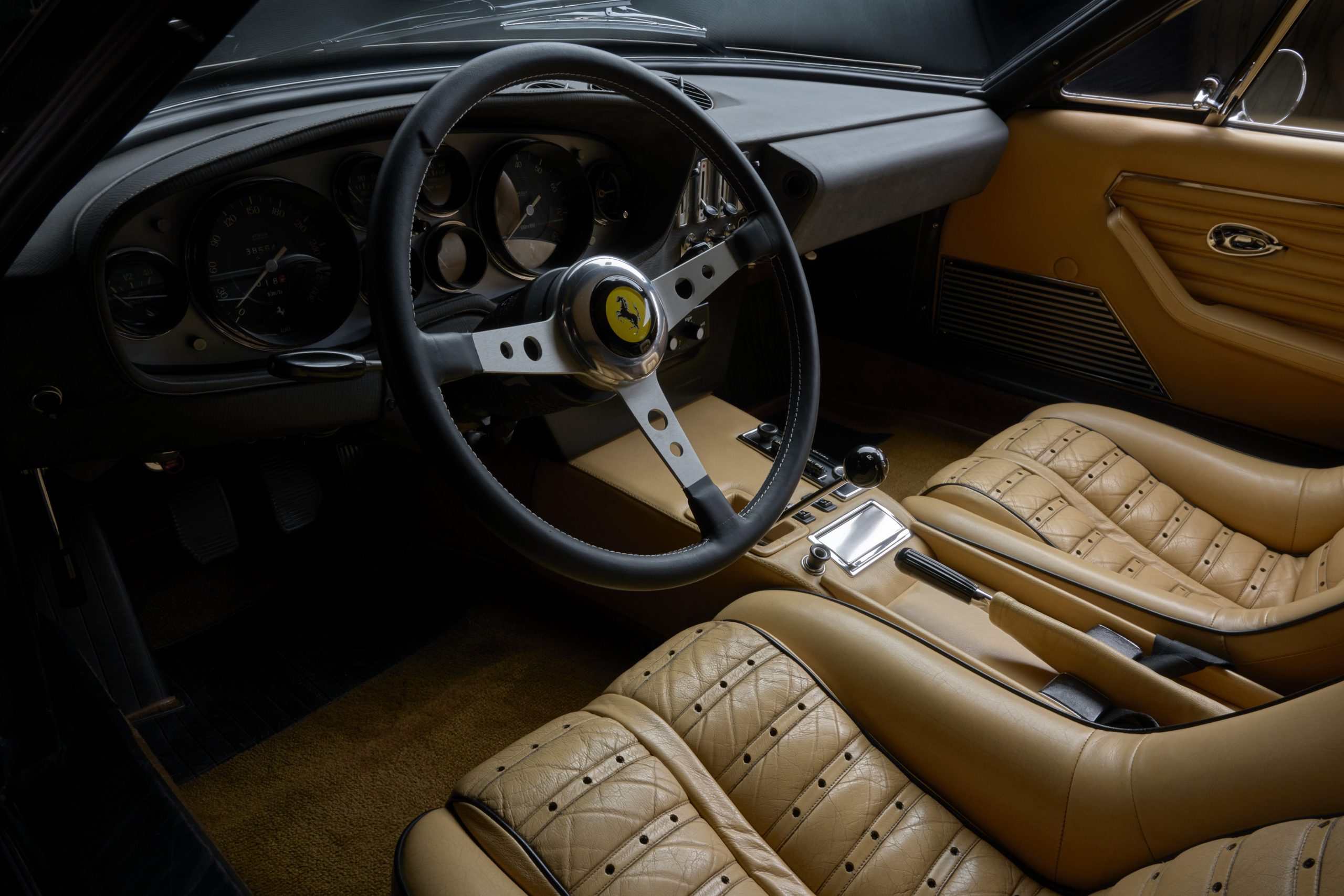
The Daytona’s shapely bucket seats have towelling inserts on early cars, while later examples usually have full leather and head restraints. There’s room for two, supplemented by a decent-sized boot so that the Daytona meets its brief as a car for touring.
#8 All The Carburettors
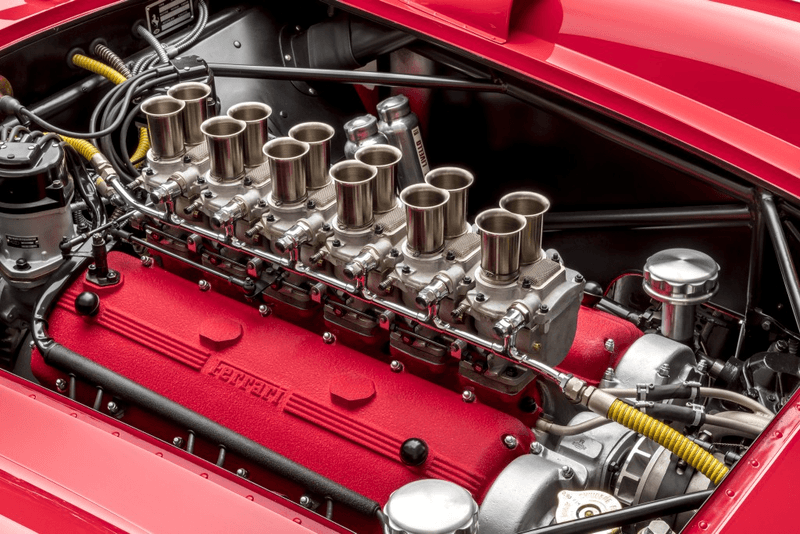
Colombo’s original Ferrari V12 was fed by three downdraft Weber carburettors, and the intake runners were ‘siamesed’ so adjacent cylinders shared a single barrel in one of the twin-choke carbs. In the 1950s the cylinder heads were redesigned to move the sparkplugs from the inside of the vee to the outside of the engine, making space in the middle to improve the induction system. The intake runners were separated and six twin-choke Weber carbs were fitted, so each combustion chamber was fed by an individual carburettor choke for optimum efficiency and better drivability.
#9 Plexi and pop-up lights
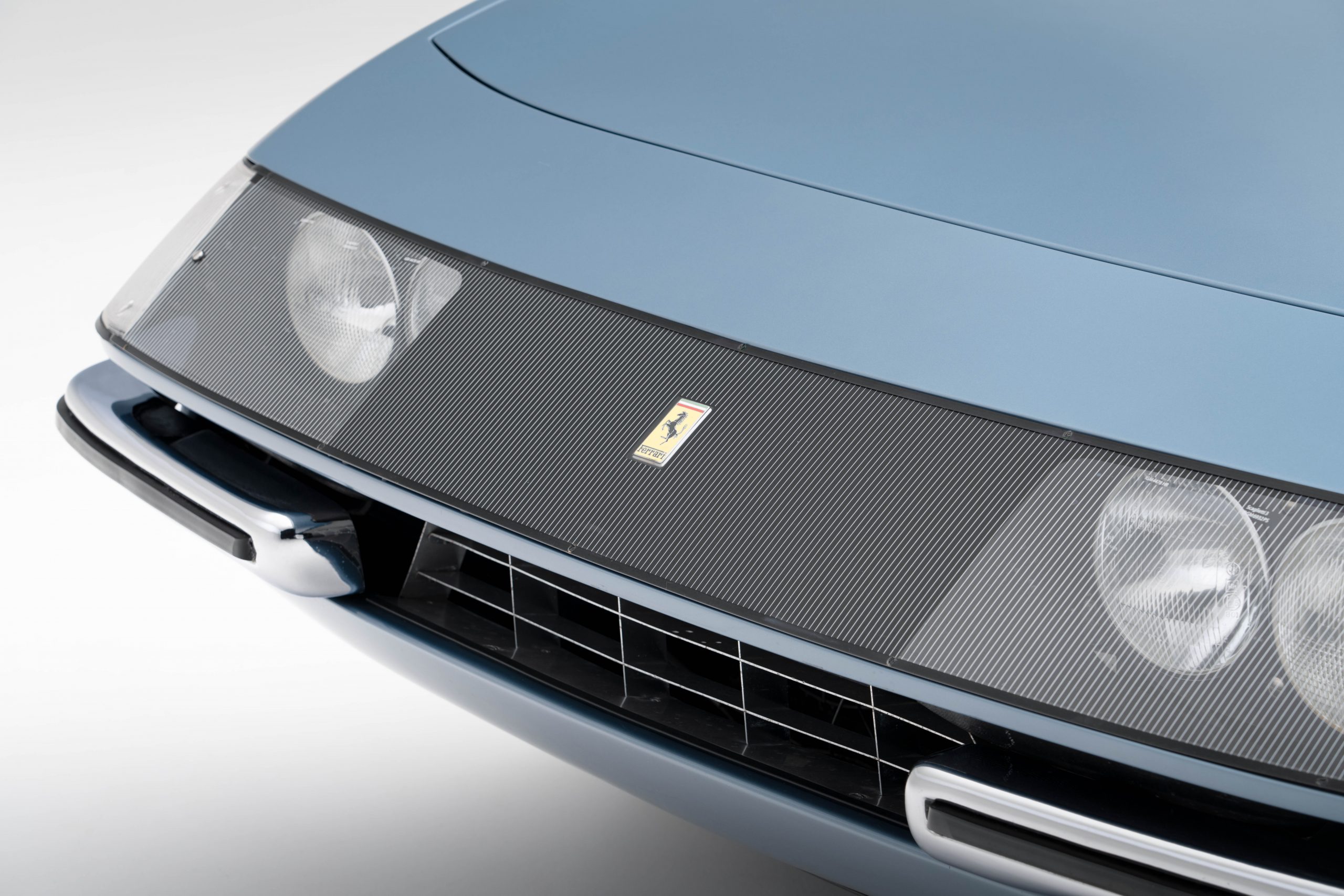
Designer Leonardo Fioravanti wanted to give the Daytona a much more modern, aerodynamic style than the previous 275 GTB, which had been criticised for its old-fashioned styling. Key to the new shape was a shovel nose incorporating four headlamps under Plexiglas covers. These early ‘Plexi’ cars made up less than a third of the Daytona’s production run and this rarity adds to their value. Most Daytonas had the pop-up headlamps which were introduced in 1971 to meet new US safety legislation that raised the minimum height of the lamps. A prototype with raised, fixed lamps was built but the pop-ups were chosen to avoid a major change to the front-end looks.
#10 The Name
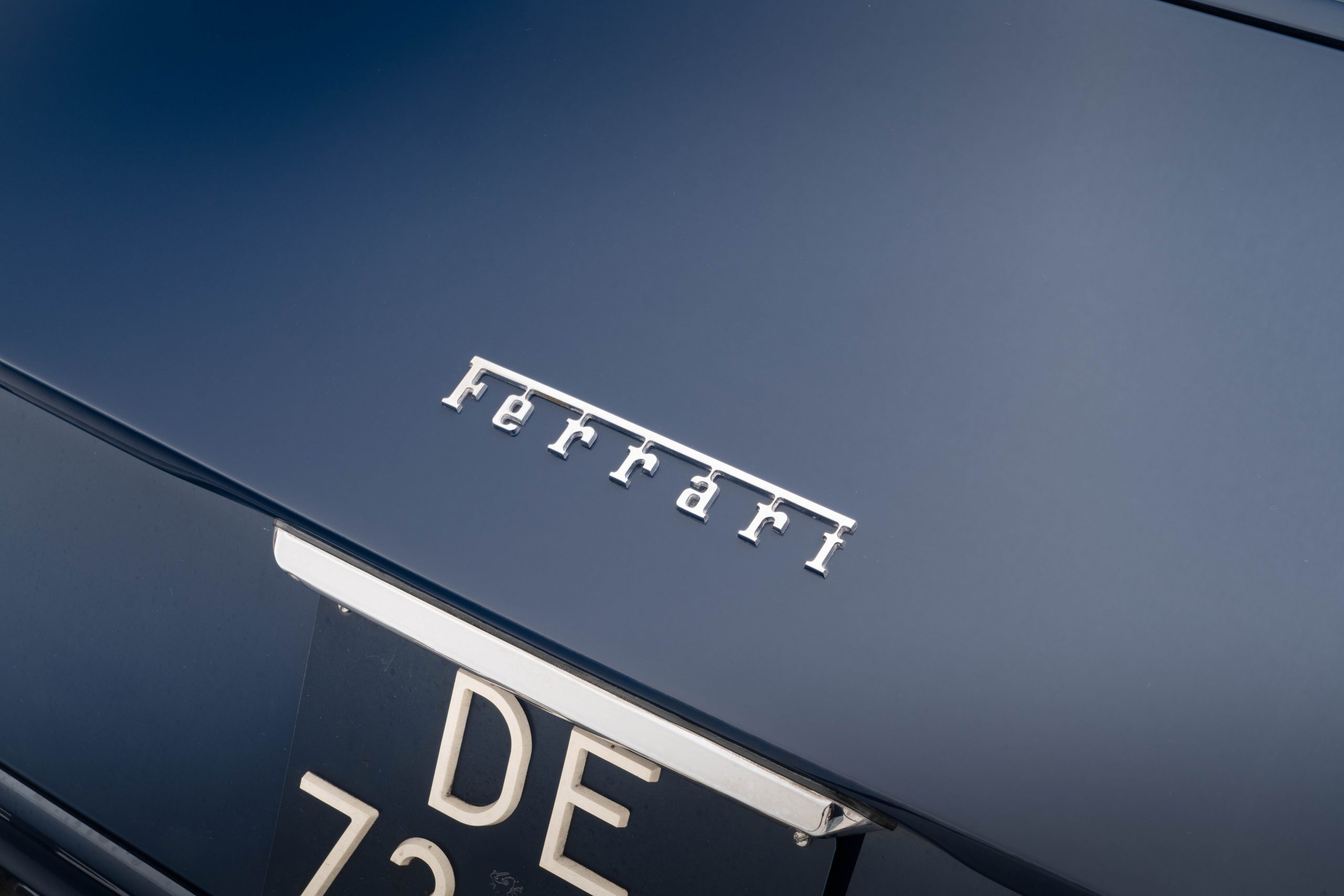
Officially it was the 365 GTB/4, but most people know it by the more evocative Daytona title. In February 1967 Ferrari tackled the tough 24 Hours of Daytona endurance race and came away with a stunning 1-2-3 victory. As Leonardo Fioravanti, who designed the Daytona at Pininfarina, explains in the Ultimate Ferrari Daytona book, the Daytona name was already being used to refer to the new car by May 1967 – just days after Enzo Ferrari had given the project the green light. It was more than a year before the car would make its debut, at the 1968 Paris motor show. But Daytona, as the car is now universally known, would only ever be a nickname.